https://successplaybook.matchbest.ai
Tested 2026-08-06 14:41:42 using Chrome 150.0.7871.186 (runtime settings)
This page is snappy to interact with, visually stable and follows best practices, but slow to paint, weak on user privacy and slow to respond from the server.






Visual metrics
Google Web Vitals
Largest contentful paint is poor 5.108 s. It is in the Google Web Vitals poor range, slower than 4 seconds.
The main document gets redirected 1 time(s). Remove those redirect and make the page faster!
First contentful paint can be improved (2.208 s). It is in the Google Web Vitals needs improvement range, slower than 1.8 seconds.
Timings summary
| Metric | Min | Median | Mean | Max |
|---|---|---|---|---|
| First visual change | 2.133 s | 2.133 s | 2.133 s | 2.133 s |
| Last visual change | 5.067 s | 5.067 s | 5.067 s | 5.067 s |
| Speed index | 3.775 s | 3.775 s | 3.775 s | 3.775 s |
| Visual readiness | 2.934 s | 2.934 s | 2.934 s | 2.934 s |
| Visual complete 85 | 5.067 s | 5.067 s | 5.067 s | 5.067 s |
| Visual complete 95 | 5.067 s | 5.067 s | 5.067 s | 5.067 s |
| Visual complete 99 | 5.067 s | 5.067 s | 5.067 s | 5.067 s |
Run 1 SpeedIndex median
The red band on the timeline marks when the main thread was busy with long tasks: moments when the page could not paint or respond, however the video looks.
Download videoUse --filmstrip.showAll to show all filmstrips.



















Click a frame to seek the video to that moment. The dot marks frames where the page changed visually.
The server dominated the wait. The first byte took 1.094 s (50 % of the time to First Contentful Paint). Nothing can render before it arrives, and Google Web Vitals considers a TTFB over 800 ms in need of improvement. See the request timing on the Waterfall tab. First paint landed at 2.208 s; the 1 render-blocking request was done by 2.057 s and the remaining ~151 ms is style and layout work. The largest paint followed at 5.108 s.
Want to see how much CSS style-recalculation work delayed FCP and LCP, plus CPU long tasks? Run with --cpu.
Blocking requests delay both paints: the browser renders nothing until they arrive, so they push First Contentful Paint and everything after it, including the largest paint (LCP). Requests that block the parser inside the body stall everything after them in the document. Load JavaScript with defer or async, and keep non-critical CSS off the critical path with media attributes. Bars show when each request loaded on a clock that runs to the last paint (the dashed line is FCP, the clock ends at LCP); the gap after the bars is style and layout work. Web fonts are context, not blockers: text renders invisible or in a fallback face while they load, so a font finishing after a paint is the classic reason text changed late.
| Request | When it loaded | Transfer | Download |
|---|---|---|---|
document | 812 ms | 491 B | 811 ms |
0tbq81wkoua76.cssblocking | 959 ms | 14.6 KB | 959 ms |
2l5edficfyk_d.jspotentially blocking | 962 ms | 12.4 KB | 962 ms |
3lc48pk1d6lzq.jspotentially blocking | 752 ms | 38.3 KB | 752 ms |
0iec5q4ack_04.jspotentially blocking | 745 ms | 69.8 KB | 745 ms |
1d4h-sglyo8ft.jspotentially blocking | 261 ms | 637 B | 261 ms |
turbopack-31jrt2zdlumfi.jspotentially blocking | 258 ms | 4.4 KB | 258 ms |
3yme4_s7e9gs_.jspotentially blocking | 254 ms | 13.9 KB | 254 ms |
06yoaqs21mkk8.jspotentially blocking | 252 ms | 7.1 KB | 252 ms |
| 2 more requests | all done by 2.313 s | 5.0 KB | |
LCP resource | 2.731 s | 2.1 MB | 2.731 s |
514 ms | 34.1 KB | 514 ms | |
525 ms | 22.9 KB | 525 ms | |
01.277 s3.831 sFCP 2.208 sLCP 5.108 s |
The coach helps you find performance problems on your web page using web performance best practice rules. And gives you advice on privacy and best practices. Tested using Coach-core version 9.2.1.
largestContentfulPaintLargest contentful paint is poor 5.108 s. It is in the Google Web Vitals poor range, slower than 4 seconds.
Largest contentful paint is one of Google Web Vitals and reports the render time of the largest image or text block visible within the viewport, relative to when the page first started loading. To be fast according to Google, it needs to render before 2.5 seconds and results over 4 seconds is poor performance.
documentRedirectThe main document gets redirected 1 time(s). Remove those redirect and make the page faster!
You should never ever redirect the main document, because it will make the page load slower for the user. Well, you should redirect the user if the user tries to use HTTP and there's an HTTPS version of the page. The coach checks for that. :)
firstContentfulPaintFirst contentful paint can be improved (2.208 s). It is in the Google Web Vitals needs improvement range, slower than 1.8 seconds.
The First Contentful Paint (FCP) metric measures the time from when the page starts loading to when any part of the page content is rendered on the screen. For this metric, "content" refers to text, images (including background images), <svg> elements, or non-white <canvas> elements.
imageSizeThe page total image size is 3.2 MB. It's really big. Is the page using the right format for the images? Can they be lazy loaded? Are they compressed as good as they can be? Make them smaller by using https://imageoptim.com/.
Avoid having too many large images on the page. The images will not affect the first paint of the page, but it will eat bandwidth for the user.
longTasksThe page has 2 CPU long tasks with the total of 167 ms. The total blocking time is 67 ms . However the CPU Long Task is depending on the computer/phones actual CPU speed, so you should measure this on the same type of the device that your user is using. Use Geckoprofiler for Firefox or Chromes tracelog to debug your long tasks.
Long CPU tasks locks the thread. To the user this is commonly visible as a "locked up" page where the browser is unable to respond to user input; this is a major source of bad user experience on the web today. However the CPU Long Task is depending on the computer/phones actual CPU speed, so you should measure this on the same type of the device that your user is using. To debug you should use the Chrome timeline log and drag/drop it into devtools or use Firefox Geckoprofiler.
cacheHeadersThe page has 4 requests that are missing a cache time. Configure a cache time so the browser doesn't need to download them every time. It will save 2.5 MB the next access.
The easiest way to make your page fast is to avoid doing requests to the server. Setting a cache header on your server response will tell the browser that it doesn't need to download the asset again during the configured cache time! Always try to set a cache time if the content doesn't change for every request.
inlineCssThe page loads 3 CSS requests inside of head, try to inline the CSS for the first render and lazy load the rest.
In the early days of the Internet, inlining CSS was one of the ugliest things you can do. That has changed if you want your page to start rendering fast for your user. Always inline the critical CSS when you use HTTP/1 and HTTP/2 (avoid doing CSS requests that block rendering) and lazy load and cache the rest of the CSS. It is a little more complicated when using HTTP/2. Does your server support HTTP push? Then maybe that can help. Do you have a lot of users on a slow connection and are serving large chunks of HTML? Then it could be better to use the inline technique, becasue some servers always prioritize HTML content over CSS so the user needs to download the HTML first, before the CSS is downloaded.
fewFontsThe page has 2 font requests. Do you really need them? What value does the fonts give the user?
How many fonts do you need on a page for the user to get the message? Fonts can slow down the rendering of content, try to avoid loading too many of them because worst case it can make the text invisible until they are loaded (FOIT—flash of invisible text), best case they will flicker the text content when they arrive.
privateAssetsThe page has 2 requests with private headers. Make sure that the assets really should be private and only used by one user. Otherwise, make it cacheable for everyone.
If you set private headers on content, that means that the content are specific for that user. Static content should be able to be cached and used by everyone. Avoid setting the cache header to private.
avoidScalingImagesThe page has 1 image that are scaled more than 100 pixels. It would be better if those images are sent so the browser don't need to scale them.
It's easy to scale images in the browser and make sure they look good in different devices, however that is bad for performance! Scaling images in the browser takes extra CPU time and will hurt performance on mobile. And the user will download extra kilobytes (sometimes megabytes) of data that could be avoided. Don't do that, make sure you create multiple version of the same image server-side and serve the appropriate one.
spofThe page has 2 requests inside of the head that can cause a SPOF (single point of failure). Load them asynchronously or move them outside of the document head.
A page can be stopped from loading in the browser if a single JavaScript, CSS, and in some cases a font, couldn't be fetched or is loading really slowly (the white screen of death). That is a scenario you really want to avoid. Never load 3rd-party components synchronously inside of the head tag.
assetsRedirectsThe page has 1 redirect. 1 of the redirects are from the base domain, please fix them!
A redirect is one extra step for the user to download the asset. Avoid that if you want to be fast. Redirects are even more of a showstopper on mobile.
cacheHeadersLongThe page has 2 requests that have a shorter cache time than one year (but still a cache time).
Setting a cache header is good. Setting a long cache header (a year) is even better because the asset will stay in the browser cache across visits. For content-hashed URLs (e.g. app.4af2.css) you can safely use Cache-Control: max-age=31536000, immutable. For unversioned URLs that may change, use a revalidating strategy instead.
unnecessaryHeadersThere are 2 responses that sets both a max-age and expires header. There are 20 responses that sets a server header.
Do not send headers that you don't need. We look for p3p, cache-control and max-age, pragma, server and x-frame-options headers. Have a look at Andrew Betts - Headers for Hackers talk as a guide https://www.youtube.com/watch?v=k92ZbrY815c or read https://www.fastly.com/blog/headers-we-dont-want.
referrerPolicyNo <meta name="referrer"> tag was found on the page. Set a Referrer-Policy response header (preferred) or add a meta tag, for example <meta name="referrer" content="strict-origin-when-cross-origin">.
Without an explicit referrer policy the browser falls back to the user-agent default and may leak the full URL of the previous page (including query strings) to every cross-origin request. Set a Referrer-Policy response header (preferred) or a <meta name="referrer"> tag in the document. https://developer.mozilla.org/en-US/docs/Web/HTTP/Headers/Referrer-Policy
contentSecurityPolicyHeaderSet a Content-Security-Policy header to mitigate cross-site scripting attacks. You can start with a Content-Security-Policy-Report-Only header, which only reports violations rather than blocking them.
A Content-Security-Policy response header tells the browser which sources of script, style, and other content are allowed. The most effective form is a strict CSP using nonces or hashes together with strict-dynamic; the worst is a missing header, with unsafe-inline and unsafe-eval close behind. https://web.dev/articles/strict-csp
crossOriginEmbedderPolicyHeaderSet a Cross-Origin-Embedder-Policy header (typically require-corp or credentialless) on the document response to control cross-origin embedding.
Cross-Origin-Embedder-Policy (COEP) makes the page refuse to load cross-origin subresources unless they explicitly opt in via CORP or CORS. Together with Cross-Origin-Opener-Policy it puts the page in a cross-origin isolated context, which mitigates cross-window side-channel attacks (Spectre) and unlocks high-resolution timers and SharedArrayBuffer. https://developer.mozilla.org/en-US/docs/Web/HTTP/Headers/Cross-Origin-Embedder-Policy
crossOriginOpenerPolicyHeaderSet a Cross-Origin-Opener-Policy header (typically same-origin) on the document response to isolate the page from cross-origin windows.
Cross-Origin-Opener-Policy (COOP) lets a page sever its window-group ties to cross-origin documents that opened it or that it opens. Together with Cross-Origin-Embedder-Policy it puts the page in a cross-origin isolated context, which mitigates cross-window side-channel attacks (Spectre) and unlocks high-resolution timers and SharedArrayBuffer. https://developer.mozilla.org/en-US/docs/Web/HTTP/Headers/Cross-Origin-Opener-Policy
crossOriginResourcePolicyHeaderSet a Cross-Origin-Resource-Policy header (same-origin, same-site or cross-origin) on the document response to limit who may embed it.
Cross-Origin-Resource-Policy (CORP) is a per-response opt-in that tells the browser which origins are allowed to embed the resource. It blocks cross-origin or cross-site no-cors embedding (img, script, iframe, etc.) and is one of the building blocks of cross-origin isolation. https://developer.mozilla.org/en-US/docs/Web/HTTP/Headers/Cross-Origin-Resource-Policy
nelHeaderSet a NEL header (paired with Reporting-Endpoints) to collect connection-level error reports from the field.
The NEL (Network Error Logging) response header tells the browser to record connection-level failures (DNS, TLS, HTTP errors) and ship them to a reporting endpoint. NEL pairs with the Reporting-Endpoints / Report-To header — the page declares the endpoint group and NEL points at it. Together they give you visibility into errors that never reach your origin server. https://developer.mozilla.org/en-US/docs/Web/HTTP/Headers/NEL
permissionsPolicyHeaderSet a Permissions-Policy header to control which browser features the page can use.
The Permissions-Policy response header (the successor to Feature-Policy) lets a site explicitly opt in or out of powerful browser features such as camera, microphone, geolocation, payment and clipboard. Setting a strict policy reduces the attack surface and limits what embedded third parties can do. https://developer.mozilla.org/en-US/docs/Web/HTTP/Headers/Permissions-Policy
referrerPolicyHeaderSet a referrer-policy header to make sure you do not leak user information.
Referrer Policy is a new header that allows a site to control how much information the browser includes with navigations away from a document and should be set by all sites. https://scotthelme.co.uk/a-new-security-header-referrer-policy/.
reportingEndpointsHeaderSet a Reporting-Endpoints header (or the legacy Report-To header) so CSP reports, NEL data and other Reporting-API events have an endpoint to land at.
The Reporting-Endpoints response header (the successor to Report-To) names the URLs that browsers should POST reports to. Without it, CSP report-to directives, Cross-Origin-Opener-Policy reports, NEL data and other Reporting-API events have nowhere to go. The legacy Report-To header is still accepted for older Chromium versions. https://developer.mozilla.org/en-US/docs/Web/HTTP/Headers/Reporting-Endpoints
strictTransportSecurityHeaderSet a strict transport header to make sure the user always use HTTPS.
The HTTP Strict-Transport-Security response header (often abbreviated as HSTS) lets a web site tell browsers that it should only be accessed using HTTPS, instead of using HTTP. https://developer.mozilla.org/en-US/docs/Web/HTTP/Headers/Strict-Transport-Security.
thirdPartyPrivacyThe page has 10% requests that are 3rd party (2 requests with a size of 1.7 kB). The page also have request to companies that harvest data from users and do not respect users privacy (see https://en.wikipedia.org/wiki/Surveillance_capitalism). The page do 2 survelliance requests and uses 1 survelliance tool. The page do 2 surveillance requests and uses 1 surveillance tool.
Using third party requests shares user information with that third party. Please avoid that! The project https://github.com/patrickhulce/third-party-web is used to categorize first/third party requests.
xContentTypeOptionsHeaderSet X-Content-Type-Options: nosniff on the document response to prevent MIME-sniffing.
X-Content-Type-Options: nosniff prevents browsers from interpreting files as a different MIME type than what is declared in the Content-Type header. This blocks a class of cross-site scripting and content-type confusion attacks and should be set on every response. https://developer.mozilla.org/en-US/docs/Web/HTTP/Headers/X-Content-Type-Options
A snapshot of what the browser actually built for this page: the document, how big and deep the DOM tree is and what it kept in storage. Big, deep trees are slower to style and lay out, so the counts Chrome warns about carry a flag.
Document
What the page says it is and how large it rendered.
DOM structure
How much markup the browser has to build, style and lay out.
What the page stored on the client, and the network it was tested on.
Data collected using
Coach-core version 9.2.1. With updated code from
Webappanalyzer 2026-05-04. Use
--browsertime.firefox.includeResponseBodies html or
--browsertime.chrome.includeResponseBodies html to help Wappalyzer find more information about technologies used.
Data collected using Third Party Web version 0.29.2.
Data from run 1
0.0s2.5s2.8s3.2s3.5s3.9s4.2s5.1sWhen the page main content is rendered, collected via the Largest Contentful Paint API. Read more about Largest Contentful Paint.
body > div:eq(1) > div:eq(1)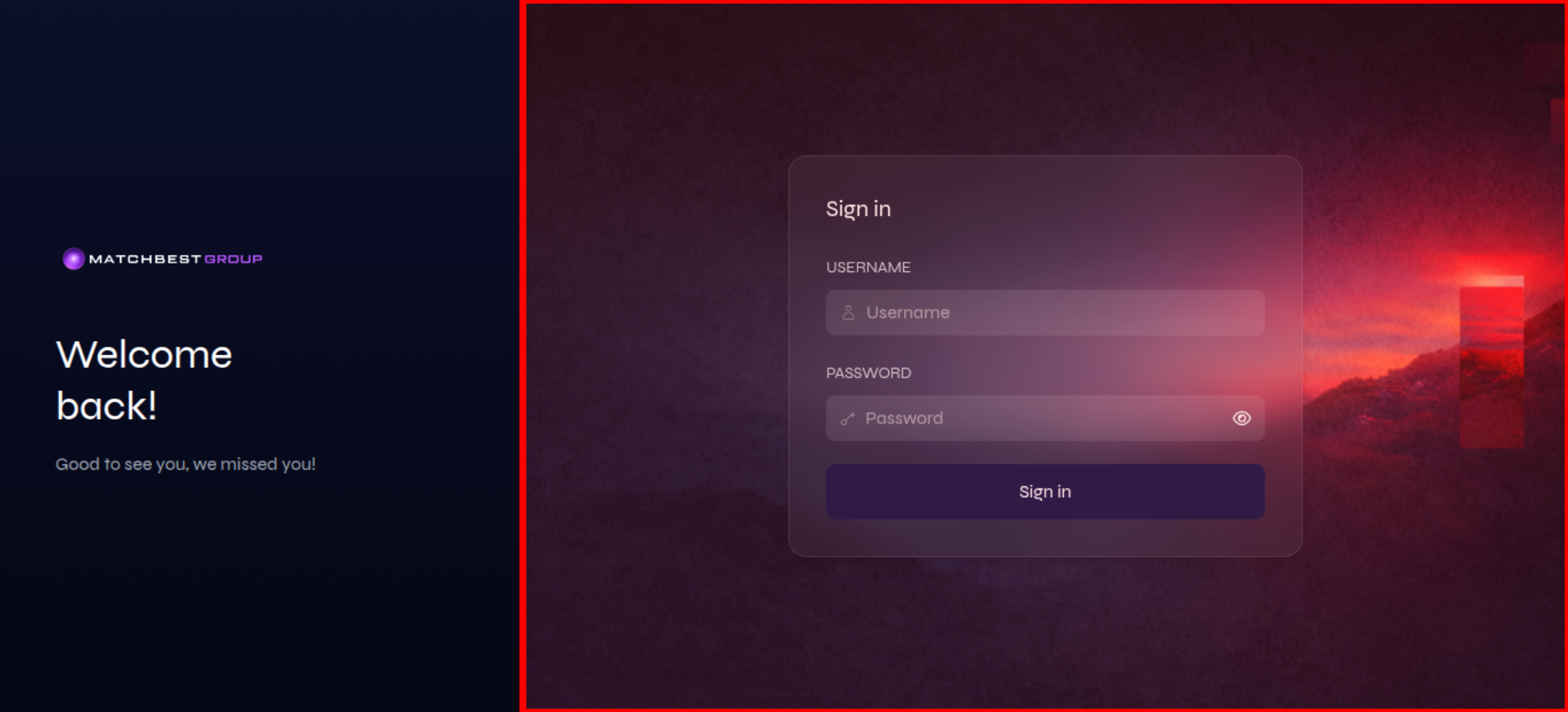
The LCP element is highlighted in the screenshot. If nothing is highlighted the element was removed before the screenshot or the LCP API couldn't find it.
The Largest Contentful Paint API matched this image:

How much the page's content shifts as it loads, collected via the Cumulative Layout Shift API.
One shift is 100% of your 0.000 CLS. h1 moved at 2.687 s. Reserve space for whatever renders into that spot, a fixed height or an aspect-ratio box, so later content stops pushing the page around.
Worst first, showing shifts of 0.01 and up. Each percentage is that shift's exact share of the score.
The shift is spread across many movements below 0.01, none large enough to single out. Check the video or filmstrip to see what moved.
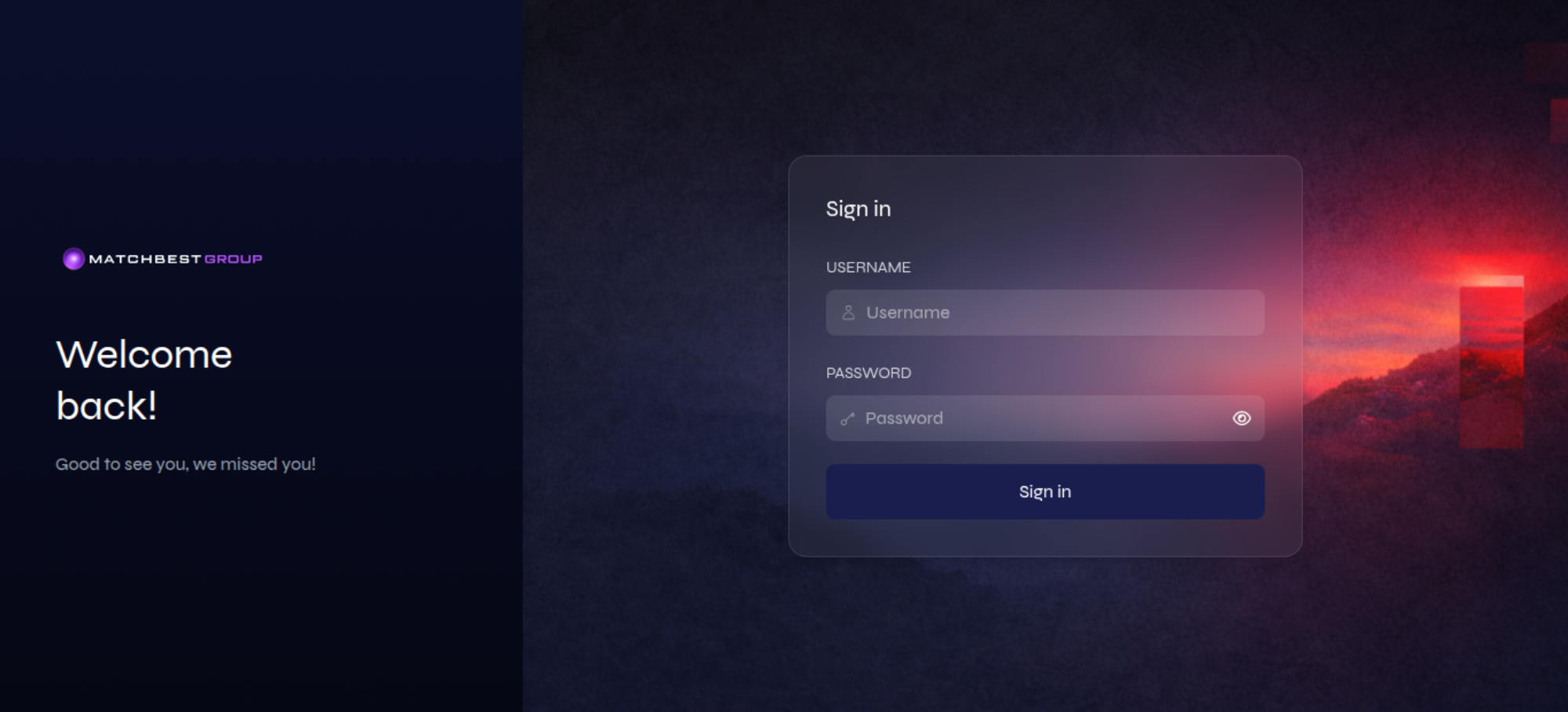
Elements that shifted by more than 0.01 are highlighted in the screenshot. If an element shifted outside the viewport, it won't appear here. Check the video or filmstrip to see the shift.
There are no custom configured scripts.
There are no custom extra metrics from scripting.
How the page is built.
https://successplaybook.matchbest.ai/login
| Header | Value |
|---|---|
cache-control | s-maxage=31536000 |
connection | keep-alive |
content-encoding | gzip |
content-type | text/html; charset=utf-8 |
date | Thu, 06 Aug 2026 14:41:44 GMT |
etag | "kw6y7q0d7pao6" |
server | nginx/1.28.3 (Ubuntu) |
transfer-encoding | chunked |
vary | rsc, next-router-state-tree, next-router-prefetch, next-router-segment-prefetch, Accept-Encoding |
x-nextjs-cache | HIT |
x-nextjs-prerender | 1 1 |
x-nextjs-stale-time | 300 |
Transfer size2.6 MB
Content size3.8 MB
Requests19
| Content | Header Size | Transfer Size | Content Size | Requests |
|---|---|---|---|---|
| html | 436 B | 4.1 KB | 13.5 KB | 1 |
| css | 374 B | 15.9 KB | 98.9 KB | 3 |
| javascript | 3.8 KB | 154.1 KB | 530.1 KB | 10 |
| image | 323 B | 169.7 KB | 169.5 KB | 1 |
| font | 616 B | 56.3 KB | 56.3 KB | 2 |
| svg | 693 B | 2.2 MB | 2.9 MB | 2 |
| Total | 6.1 KB | 2.6 MB | 3.8 MB | 19 |
| Domain | Total download time | Transfer Size | Content Size | Requests |
|---|---|---|---|---|
| successplaybook.matchbest.ai | 12.210 s | 2.6 MB | 3.8 MB | 18 |
| fonts.googleapis.com | 192 ms | 1.7 KB | 11.0 KB | 2 |
| type | min | median | max |
|---|---|---|---|
| Expires | 0 seconds | 1 year | 1 year |
| Last modified | 0 seconds | 3 weeks | 3 weeks |
Includes requests done after load event end.
| Content | Transfer Size | Requests |
|---|---|---|
| html | 0 b | 0 |
| css | 0 b | 0 |
| javascript | 0 b | 0 |
| image | 169.7 KB | 1 |
| font | 0 b | 0 |
| favicon | 0 b | 0 |
| Total | 169.7 KB | 1 |
Includes requests done after DOM content loaded.
| Content | Transfer Size | Requests |
|---|---|---|
| html | 0 b | 0 |
| css | 0 b | 0 |
| javascript | 0 b | 0 |
| image | 169.7 KB | 1 |
| font | 0 b | 0 |
| favicon | 0 b | 0 |
| svg | 87.6 KB | 1 |
| Total | 257.2 KB | 2 |
--enableProfileRun to see where main-thread time went, blocking time and CPU cost per script, module and function, forced reflows and frame stability. The data is collected in one extra run, so the timing metrics of your measured runs stay untouched.Tasks ≥ 50 ms blocking the main thread, collected via the Long Task API.
A long animation frame (LOAF) is a frame that took ≥ 50 ms from input to the next paint. The part beyond the threshold is blocking time, the number that hurts Interaction to Next Paint and Total Blocking Time. Break long tasks up (scheduler.yield(), smaller chunks) or move the work off the main thread. Read more about the Long Animation Frames API.
| Script | Frames | Time running | Blocking (share by run time) | Forced style & layout | Triggered by |
|---|---|---|---|---|---|
| 0iec5q4ack_04.js | 2 | 115.1 ms | 44.1 ms | – | script tag, event handler |
A frame's blocking time is split between its scripts by their share of the frame's work, capped at each script's own run time — blocking from work no script owns (HTML parsing, browser internals) stays unattributed. The per-script blocking view below uses the same attribution.
The browser did not report which script was responsible for this frame — typically its own style/layout work, or a cross-origin script it will not name.
4 more long frames carried no blocking time (nothing ran past the 50 ms threshold) — long, but harmless to INP and TBT.
How much each script blocked the main thread, derived from the Long Animation Frame API. Each frame's blocking time is split between its scripts by their share of the frame's work, capped at each script's own run time — blocking from work no script owns (HTML parsing, browser internals) is not attributed (older data credits the script that started the frame). The closest answer to "which script should I fix to improve TBT" the platform exposes.
Third party requests categorised by Third party web version 0.29.2.
Requests by category4
Transfer size2.6 MB
Content size3.8 MB
Requests20
Calculated using .*matchbest.* (use --firstParty to configure).
| Content | Header Size | Transfer Size | Content Size | Requests |
|---|---|---|---|---|
| html | 436 B | 4.1 KB | 13.5 KB | 1 |
| css | 374 B | 14.2 KB | 87.9 KB | 1 |
| javascript | 3.8 KB | 154.1 KB | 530.1 KB | 10 |
| image | 323 B | 169.7 KB | 169.5 KB | 1 |
| font | 616 B | 56.3 KB | 56.3 KB | 2 |
| favicon | 0 b | 0 b | 0 b | 0 |
| svg | 693 B | 2.2 MB | 2.9 MB | 2 |
| Total | 6.6 KB | 2.6 MB | 3.8 MB | 18 |
| Content | Header Size | Transfer Size | Content Size | Requests |
|---|---|---|---|---|
| html | 0 b | 0 b | 0 b | 0 |
| css | 0 b | 1.7 KB | 11.0 KB | 2 |
| javascript | 0 b | 0 b | 0 b | 0 |
| image | 0 b | 0 b | 0 b | 0 |
| font | 0 b | 0 b | 0 b | 0 |
| favicon | 0 b | 0 b | 0 b | 0 |
| Total | N/A | 1.7 KB | 11.0 KB | 2 |